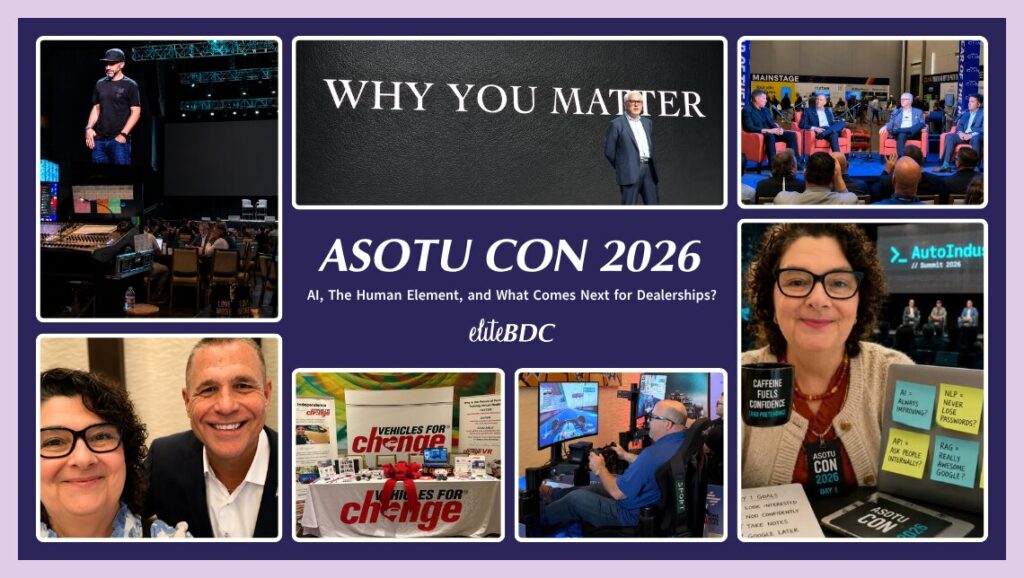
I just wrapped up a few days at ASOTU CON, and I came away with a few themes that have really stayed on my mind.
First: this may be the year of the human.
That may sound strange considering how much of the conference centered around AI, automation, data, and technology, but the deeper message felt very different. As we accelerate into a world shaped by AI, I do not see this as a replacement — I see it as an enablement.
The real opportunity is removing repetitive, low-value tasks so dealership teams can focus on what actually drives performance:
- leadership
- customer experience
- relationship-building
- problem-solving
- decision-making
The dealerships that win will not simply be the ones with the most AI. They will be the ones that combine AI with strong people, strong processes, and strong customer communication.
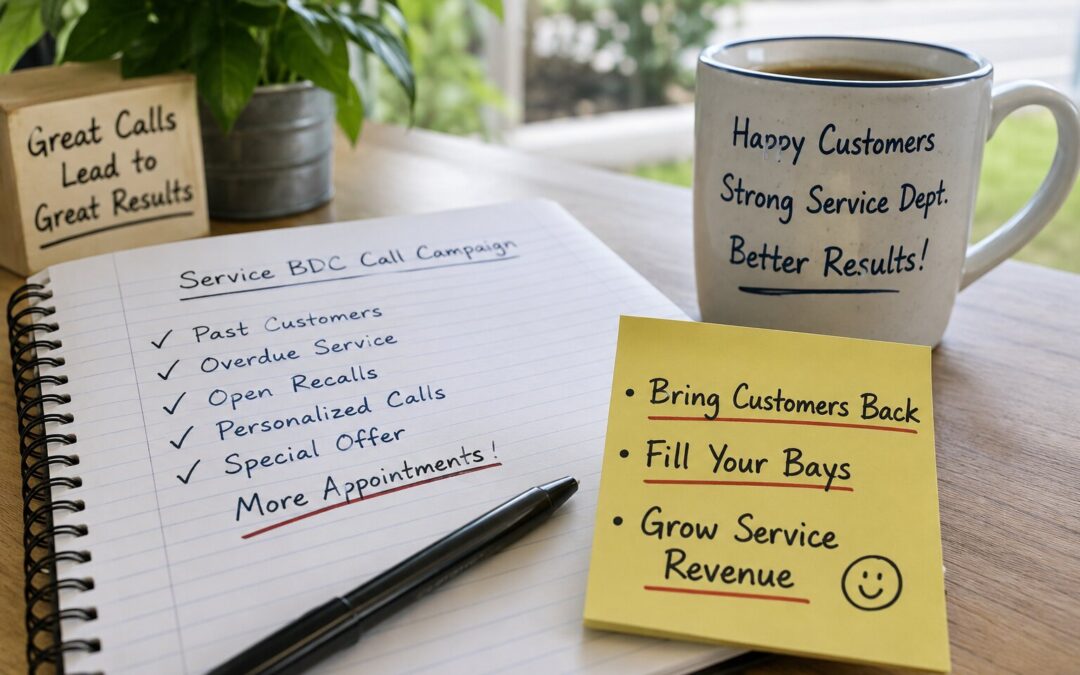
One of the most interesting sessions I attended involved an AI company who demonstrated how AI is being used to create customized service campaigns using dealership DMS and CRM data. The concept was powerful: targeting the right customer with the right message at the right time based on service history, ownership data, and customer behavior.
What really stood out to me was one of the audience questions:
“What happens when these campaigns actually work, and dealerships suddenly have more inbound calls than their teams can handle? Do they hire more people?”
That question hit directly on a growing issue in automotive.
Many dealerships are trying to improve marketing performance, increase appointment volume, and create better customer engagement — but operationally, many stores are already stretched thin handling phones, internet leads, service scheduling, and follow-up.
The reality is that campaigns may create spikes in inbound volume that do not happen consistently enough to justify hiring full-time staff for every surge.
That is where flexible support models become extremely important.
This is one reason outsourced solutions like Elite BDC continue to make sense for many dealerships. Stores need the ability to scale communication quickly without sacrificing customer experience, speed-to-answer, or appointment-setting quality.
Another major takeaway:
The innovation happening in automotive AI right now is real — but increasingly fragmented.
There are powerful tools emerging across:
- voice AI
- inbound and outbound communication
- service scheduling
- coaching
- recruiting
- F&I
- marketing automation
- customer engagement
But many of these tools are highly specialized and focused on solving one narrow problem exceptionally well.
Long term, it is difficult to imagine dealerships efficiently operating inside a patchwork of disconnected systems forever. My sense is that we may see meaningful consolidation over the next several years as platforms evolve into broader end-to-end ecosystems.
At the same time, both legacy systems and narrow point solutions may face pressure to evolve quickly.
Some legacy systems are still built around closed architectures where dealers do not truly own or freely access their own data. On the other side, highly specialized tools may struggle as AI capabilities become broader, more integrated, and more accessible across platforms.
The path forward feels increasingly clear:
- Deliver real value quickly
- Improve dealership efficiency
- Help teams operate smarter
- Build flexible systems
- Keep dealer data accessible
- Support the human side of the business instead of replacing it
One thing became very clear at ASOTU CON:
Dealers are not asking whether AI is coming anymore.
They are asking:
“How do we use it correctly?”
“How do we improve operations without hurting customer experience?”
“How do we keep the human connection while becoming more efficient?”
That balance may become one of the biggest competitive advantages in automotive over the next few years.